
Monel Round Bars
Monel round bars are solid cylindrical nickel-copper alloy products used for highly corrosive environments, marine shafts, chemical processing components and aerospace parts. But a grade and diameter alone don’t always define the complete product: a purchase may also need a product standard, length, manufacturing route, tolerance, surface finish, material condition, testing and documentation. ASTM B164, for example, covers nickel-copper alloy rod and bar, establishing baseline requirements for these critical materials.
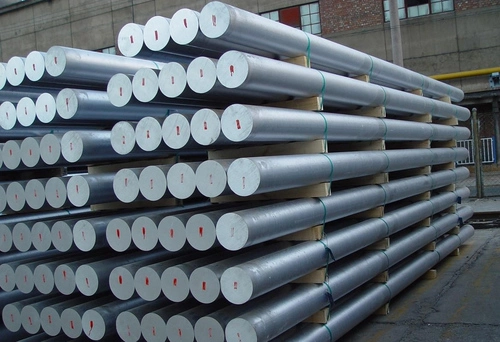
Our Product
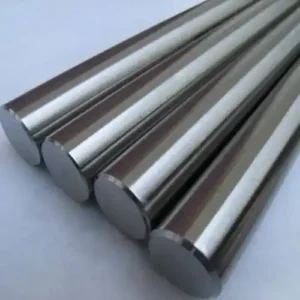
Monel 400 Round Bar
Monel 400 Round Bar manufacturer & supplier. Nickel-copper alloy with proven performance in seawater and hydrofluoric acid. Request pricing and stock.
A Monel round bar is a solid cylindrical nickel-copper alloy bar supplied to defined material, dimensional, condition and quality requirements. It helps to think about a purchase like this in five stages: first the service requirement the part has to survive, then the material and governing standard that satisfy it, then the production route used to make it, then the exact geometry and condition needed, and finally the testing and documentation that prove all of that was actually delivered.
What Are Monel Round Bars?
A Monel round bar is a solid cylindrical nickel-copper alloy product, and its complete specification can include its grade, product standard, diameter, length, manufacturing route, tolerance, surface finish, material condition and required documentation. The product specification, in practice, is the complete set of technical and commercial requirements that determines what a supplier is expected to deliver.
Nine things typically define the product. The grade establishes the material identity (the precise ratio of nickel, copper, and trace elements). The product standard identifies the governing specification. Diameter sets the intended cross-sectional size, and length determines how the bar is prepared and handled. The manufacturing route can affect dimensional and surface characteristics. Tolerance defines the acceptable dimensional deviation. Surface finish affects machining and downstream use. Material condition affects which mechanical requirements apply. And testing or documentation supports conformity and acceptance.
Consider a request for a Monel 400 round bar, 50 mm. That identifies the grade and nominal diameter, but it doesn’t tell the supplier which product standard governs, what length is required, what tolerance is acceptable, what surface finish is needed, what condition is required, or what certification and testing is expected.
Before sending an enquiry, define the application, record the required grade, identify the product standard, note diameter and length, define any critical tolerance or finish, state the required testing and documentation, and confirm quantity and destination.
The most common mistake is treating grade plus diameter as a complete specification. Important supply requirements get left undefined that way, so it helps to complete the relevant fields rather than assume a 50 mm bar from one supplier matches a 50 mm bar from another (tolerance and manufacturing condition can differ significantly). It also helps to resist copying a supplier’s entire specification table into an RFQ. Not every field they list will be relevant to your part, so specify only what actually affects the product you need.
What Monel Round Bar Grades and Families Are Available?
Monel is a specific, highly specialized family of nickel-copper alloys (typically containing ~63-67% nickel and ~28-34% copper, with small additions of iron, manganese, carbon, and silicon). Unlike stainless steel, which spans vast metallurgical families, the Monel family is relatively small but distinct in its processing and performance characteristics.
Monel 400 (UNS N04400) is the baseline solid-solution grade. It is renowned for its exceptional resistance to hydrofluoric acid, seawater, and alkaline solutions, and is notably non-magnetic. Monel K500 (UNS N05500) incorporates additions of aluminum and titanium, which allow the alloy to be age-hardened (precipitation hardened) for significantly higher strength and hardness while retaining the corrosion resistance of 400. Monel R-405 (UNS N04405) is a free-machining variant of 400 with a controlled sulfur addition for better chip breaking in automated screw machines.
Within these options, 400 is the workhorse for severe general corrosion and non-magnetic applications. K500 is selected when high tensile strength, yield strength, or hardness is required alongside corrosion resistance (such as for pump shafts, fasteners, or drill collars). R-405 is picked almost exclusively for high-volume, precision CNC machining of small components.
One assumption is worth being cautious about: assuming Monel K500 is simply a “better” version of Monel 400. K500 requires specific heat treatments to achieve its strength and can be susceptible to stress-corrosion cracking in certain environments if not properly treated, whereas 400 is virtually immune to chloride-induced stress-corrosion cracking. The most expensive or strongest grade isn’t automatically the right grade; the application determines which properties actually matter.
What Does the Application Require From the Monel Round Bar?
Grade selection should start with the conditions the component actually has to withstand, then narrow the candidates by temperature, fabrication and mechanical requirements. That’s what a service requirement really is: the environmental, thermal, fabrication and mechanical conditions the component must accommodate.
This approach works best when you know the application but aren’t sure of the exact grade. Start with the environment the bar will encounter, since that narrows the candidates fastest. Is it hydrofluoric acid (HF)? Monel is one of the few commercial alloys that can handle HF across a wide range of concentrations and temperatures; 400 is usually the default here. Is it stagnant or slow-moving seawater? Monel’s resistance to pitting and crevice corrosion makes it ideal for marine shafts and valves.
Next, consider mechanical requirements. If the part is a high-stress pump shaft, a marine propeller shaft, or a sour-gas drill collar, the strength and hardness requirements will push you toward Monel K500. If the part is a non-magnetic housing or a spring that requires cold-forming, Monel 400 is the better candidate. Finally, consider fabrication: if you are running thousands of small parts on a Swiss-type CNC lathe, the machinability of R-405 becomes the dominant constraint.
It’s tempting to reach for K500 as soon as “high strength” comes up, but high strength isn’t a single condition. The actual environment, temperature, and exposure to specific chemicals still determine whether K500 is safe to use. Shortcuts like marine means 400 or high-strength shaft means K500 are useful starting points, but they aren’t complete material-selection rules on their own.
The distinction worth remembering: you need grade selection when the service requirement is known but the material isn’t. You need specification selection when the material is already decided but the exact product still isn’t.
Which Standards, Designations and Equivalent Grades Apply to Monel Round Bars?
Monel round-bar documents can carry several identifiers, and they do different jobs. A grade designation identifies the material, a product standard sets the requirements for the product itself, and dimensional or testing standards govern specific parts of the specification. A product standard, formally, is a technical specification that establishes requirements for a defined class of products.
The same grade can appear under several designation systems depending on which document you’re reading:
| System | Example (Alloy 400) | Example (Alloy K500) | Main purpose |
|---|---|---|---|
| UNS | N04400 | N05500 | Unified alloy identification |
| EN / Werkstoff | 2.4360 | 2.4375 | European material designation |
| Trade Name | Alloy 400 | Alloy K500 | Common commercial designation |
The relevant product standards also do different jobs. Here’s a quick reference for what each one covers:
| Standard | Primary role |
|---|---|
| ASTM B164 | Nickel-Copper Alloy Rod and Bar (The primary governing standard) |
| ASTM B564 | Nickel Alloy Forgings (Relevant if the bar is a forged billet or step-shaft) |
| AMS 4674 / 4676 | Aerospace Material Specifications for specific forms and conditions |
| NACE MR0175 / ISO 15156 | Materials for use in H2S-containing environments (Sour Gas) |
| ASTM E8 / A370 | Mechanical testing methods (Tension, Hardness) |
| EN 10204 | Inspection-document types (e.g., Type 3.1 Certificates) |
ASTM explicitly distinguishes B164 (rod and bar) from B564 (forgings). Seeing B164 and B564 referenced together, it’s easy to assume they’re interchangeable for round bars. They aren’t. B164 addresses standard extruded, hot-rolled, or cold-drawn bar. B564 addresses material that has been forged, which alters the grain structure and requires different testing protocols. Similarly, NACE MR0175 doesn’t replace ASTM B164; it adds strict hardness and heat-treatment limits (usually max 35 HRC for K500) for sour gas service.
Before sending an enquiry, identify the material grade, record which designation system each document uses, identify the governing product standard, note any dimensional standard, identify the required testing standard, and verify that any equivalent grade mapping is actually accurate. A few mistakes are worth avoiding: treating every ASTM reference as if it were the material standard, assuming equivalent grades mean identical specifications, and listing every standard you’ve come across without stating which one actually applies.
What Monel Round Bar Sizes, Dimensions and Tolerances Should You Specify?
Specify more than the nominal diameter whenever dimensional control actually matters. Dimensional tolerance is simply the permitted variation from a specified dimension, and the requirements that can matter go beyond diameter alone: diameter tolerance for machining and fit, length and length tolerance for fixed or cut components, straightness for shafts and precision work, and roundness or ovality for precision fits and rotating components.
The difference this makes in practice is easy to underestimate. A 50 mm hot-rolled Monel bar produced to standard commercial tolerances will have a much wider acceptable deviation than a 50 mm cold-drawn (bright) or centerless-ground Monel bar. 50 mm on its own simply doesn’t communicate the same requirement as 50 mm h9 or a specific ASTM B164 cold-finished tolerance class.
What you actually need to specify depends on the job. General stock usually only needs diameter plus required length. Machining stock benefits from diameter, tolerance and the relevant surface condition. A precision pump shaft needs diameter, tolerance, strict straightness, and roundness. A fixed-length marine component needs length and its applicable tolerance.
Straightness and roundness aren’t needed for every purchase. They matter specifically when geometry affects machining, assembly, rotation, feeding or component performance—such as a K500 shaft spinning at high RPMs in a centrifugal pump. Common mistakes here include assuming 50 mm means exactly 50.000 mm, assuming diameter controls straightness, and treating all tolerance classes as interchangeable.
How Do Manufacturing and Finishing Processes Change a Monel Round Bar?
Manufacturing and finishing should be chosen based on the dimensional and surface result the next operation actually needs. The manufacturing route is simply the production or finishing method used to bring the bar to its specified form and condition, and hot finishing, cold drawing, peeling, turning, grinding and forging each serve a different purpose.
Hot-finished (hot-rolled or extruded) bar is worth investigating when general stock or subsequent heavy machining is sufficient. Cold-drawn (bright) or centerless ground bar matters when a controlled bright-bar condition, tighter dimensions and a better surface is genuinely required. Peeling is about controlled surface removal for size and surface refinement. Turning produces a machined outside diameter. Grinding adds further dimensional or surface precision on top of that. And forging-intended material is a separate category altogether, meant for material that will be forged rather than machined directly.
The practical way to decide: if the bar will undergo substantial machining after delivery, check whether conventional hot-finished material is actually sufficient before paying for more. Monel is a tough, gummy alloy that work-hardens rapidly during machining; buying a highly finished, cold-drawn bar only to machine away the outer layer is a waste of capital. If the delivered bar needs controlled bright-bar dimensions from the outset for a sliding fit, look at the appropriate cold-drawn or ground route.
How Do Heat Treatment, Surface Condition and Material Properties Affect Monel Round Bars?
Heat-treatment condition can drastically affect the mechanical state of Monel, but the rules differ entirely depending on whether you are buying 400 or K500. Material condition, in this context, means the metallurgical or supplied state of the product, including any relevant heat-treatment or cold-work condition.
Monel 400 cannot be hardened by heat treatment. It is a solid-solution alloy. Its mechanical properties are altered only by cold-working (strain hardening). It is typically supplied in the annealed (soft) condition for maximum corrosion resistance and ease of machining/forming, or in a cold-drawn/cold-worked condition for higher yield strength.
Monel K500, however, is age-hardenable. It is typically supplied in the annealed condition for machining, and then age-hardened (precipitation hardened) after rough machining to achieve its high strength. Alternatively, it can be supplied in the age-hardened condition, though machining it in that state is very difficult due to its hardness and tendency to work-harden. If you are buying K500, you must explicitly state whether you require it annealed (for your own machining and subsequent aging) or age-hardened (ready for final grinding/use).
The mechanical properties that typically matter are tensile strength, yield strength, elongation, and hardness. ASTM B164 requires mechanical testing for these properties for the products it covers. Surface finish and chemical passivation are also worth separating clearly. While Monel does not require “passivation” in the same way stainless steel does to remove free iron, surface cleanliness and the removal of machining lubricants are critical to prevent localized corrosion in service.
Before finalizing a spec, confirm the required grade and material condition. A buyer who compares only grade and tensile strength can still miss whether the delivered condition (annealed vs. cold-worked vs. age-hardened) actually suits their manufacturing process.
How Are Monel Round Bars Tested and Verified?
Verification should connect the purchase requirement to the physical bar itself, its identification, and the evidence that supports it. An MTC (material test certificate), typically to EN 10204 Type 3.1, is only useful when it actually corresponds to the material supplied and the specification that applies. Material traceability, in this sense, is the ability to connect supplied material back to its production or heat identification and the records associated with it.
The chain runs from requirement to order to identity to evidence to acceptance. For Monel, Positive Material Identification (PMI) is a critical verification step. Because Monel is a high-value nickel alloy, it is visually indistinguishable from certain stainless steels. PMI (usually via XRF or OES spectrometry) verifies the high nickel (65%) and copper (30%) content, ensuring the material wasn’t mixed up with standard 300-series stainless in the warehouse.
Working through verification is really a sequence of checks. Does the certificate grade match what was purchased (e.g., N04400 vs N05500)? Can the material identity or heat number be matched to the physical bar? Do the chemistry and mechanical results satisfy ASTM B164? Only once the physical material, the PMI results, and its documentation genuinely correspond should you proceed to the normal receiving procedure.
What Monel Round Bar Applications Require Different Product Choices?
Monel round bars turn up across industries where standard stainless steels fail, but the industry label should really only be a starting point. The component’s actual environment dictates the choice. An application requirement, defined more precisely, is the service and manufacturing conditions imposed by the component’s intended use.
In marine and offshore applications, the main concern is resistance to pitting, crevice corrosion, and chloride stress-corrosion cracking in seawater. Monel 400 and K500 are standard for propeller shafts, pump shafts, and seawater valve trim. In chemical processing, Monel 400 is heavily specified for hydrofluoric acid (HF) alkylation units, sulfuric acid handling, and heat exchangers where few other metals survive. In oil and gas, K500 is frequently used for drill collars, valve trim, and fasteners in sour gas environments, provided it meets the strict hardness limits set by NACE MR0175 / ISO 15156. In aerospace and defense, Monel 400 is chosen for its non-magnetic properties, used in sensitive instrument housings or submarine components where magnetic signatures must be avoided.
Define the actual service environment, operating temperature, and mechanical requirements before selecting a grade. An industry name like marine service or chemical processing describes a context, not a complete material requirement on its own.
How Should You Build a Complete Monel Round Bar Purchase Specification?
Build the specification in dependency order: material identity first, then manufacturing route, then geometry, then surface and condition, and finally evidence and delivery, since each stage depends on the one before it. A purchase specification, in full, is the complete technical description used to tell a supplier exactly what product is required.
Start with the grade, designation and product standard (e.g., Monel 400, UNS N04400, ASTM B164). From there, define the manufacturing route (hot finished, cold drawn, turned, ground). Next comes geometry: diameter, length, tolerance and straightness. Then surface and condition: specify whether 400 should be annealed or cold-worked, or whether K500 should be supplied annealed or age-hardened. Finally, evidence and delivery: testing, EN 10204 3.1 certification, PMI requirements, and export packaging.
A complete specification would cover the grade, designation, governing product standard, manufacturing route, diameter and length, critical dimensional tolerances, straightness where needed, material condition (annealed/aged/cold-worked), testing and certificate requirements, PMI requirements, quantity, and destination.
It’s a useful exercise to see the transformation directly. Monel 400 round bar, 50 mm on its own leaves standard, condition, tolerance, and testing undefined. The purpose of working through these fields is to stop critical decisions from staying implicit, which is especially important when purchasing high-cost nickel alloys where scrap or failure is financially devastating.
How Should You Request an Accurate Monel Round Bar Quote?
A good RFQ gives the supplier enough material, dimensional, condition, quality and delivery information to quote the intended product without having to make assumptions on your behalf. At minimum, an RFQ needs the grade, designation and governing standard; diameter, length and quantity; manufacturing route, tolerance and material condition; certificate, testing and PMI requirements; and delivery requirements.
It helps to compare what an incomplete request looks like against a more useful one. Monel 400 round bar becomes more useful as grade plus governing standard (ASTM B164). 50 mm becomes diameter plus required tolerance class. Certified material becomes a defined EN 10204 3.1 certificate with PMI verification. Deliver to us becomes an actual destination plus export packaging requirement.
Before sending a request, state the grade, standard, diameter and length, quantity, tolerance, material condition, certification, PMI requirements, and destination.
Ask honestly whether two qualified suppliers could reasonably interpret your RFQ differently. A supplier can certainly help identify missing requirements, but critical engineering requirements for nickel alloys shouldn’t be left to supplier guesswork. And the lowest quoted price only means something once the technical scope behind it is actually comparable.
How Should Monel Round Bars Be Packaged, Cut and Prepared for Delivery or Export?
Delivery requirements should cover cut length, product identification, protection, packaging, documentation and destination according to what the actual shipment needs. Cut-to-length simply means supplying bar material at a specified customer-required length.
Because Monel is a premium, high-value alloy, packaging is not purely a logistics issue; it is a material preservation issue. Monel is susceptible to surface contamination. If Monel bars are stored or shipped in direct contact with carbon steel, or if carbon steel dust settles on them, it can lead to localized pitting or rust-staining, which compromises the surface integrity required for marine or chemical service. Packaging needs to include separation (wooden boxes, heavy-duty VCI wrapping, interleaving) to prevent contact damage and carbon contamination.
Before shipment, state the required length and any length tolerance, define surface protection and separation requirements, define bundle or product identification, confirm the required technical documents (MTC, PMI reports), confirm packaging, and confirm the destination.
Leaving cut length until dispatch is a common mistake, since cutting is really a product requirement that belongs at the enquiry stage. Treating packaging as generic is another, since nickel alloys require specific protection to maintain their surface condition during transit.
Strategic Perspective: What Matters Most When Buying Monel Round Bars?
The strongest buying decision isn’t simply the lowest price for a familiar grade. Monel is a significant capital expenditure. The strongest offer is the one that describes the right material, production route, dimensions, condition and evidence for the intended service. Two supplier quotations are technically equivalent only when they describe the same relevant grade, product standard, dimensions, tolerance, condition, finish, testing/documentation and delivery requirements closely enough for their prices to actually be compared meaningfully.
It helps to think of the whole guide as a ladder. Why (what must the component survive) sets the service requirement. What (which material and standard satisfy it) sets the material identity. How (how it should be produced and finished) sets the manufacturing route. Exactly (what dimensions and condition are required) sets the physical specification. And prove it (how conformity will be established) sets the evidence.
A final purchasing diagnostic means covering service (environment, temperature, component duty), material (grade, governing standard), route (manufacturing route, required finish), geometry (diameter, length, critical tolerances) and evidence (testing/certification, PMI requirements), in that order, before price ever enters the conversation.
Before comparing prices, check that both quotations are for the same material, that the same relevant product standard (ASTM B164) is being applied, that diameter, length and tolerances are equivalent, that manufacturing and material conditions (annealed vs. aged) match, that testing and PMI requirements match, and that packaging requirements are comparable.
The lowest price is only the most important factor once the relevant technical scope is comparable. A lower price for an out-of-tolerance, improperly heat-treated, or carbon-contaminated Monel bar isn’t actually a lower price for the same product; it’s a massive liability. Comparing price first and resolving technical differences later gets the order backwards.
A grade-and-price mindset asks who can supply Monel 400 the cheapest. A specification mindset asks whether the quotations are actually for equivalent products in the first place. The principle worth carrying forward: choose the material from the service requirement, define the product from the material and processing needs, and only compare suppliers once the quoted specifications are technically equivalent.
Need a Quote Based on the Complete Specification?
Send your Monel round bar grade, standard, dimensions, tolerances, condition, testing requirements, quantity and destination for quotation.