
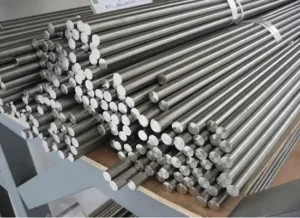
Haynes 188 Round Bar
Haynes 188 Round Bar manufacturer & supplier. Excellent high-temperature strength, oxidation and hot-corrosion resistance for gas turbines, aerospace engines, furnace components and demanding industrial applications.
Round Bars Wholesaler, Exporter & Supplier
Hastelloy round bars are solid cylindrical nickel-molybdenum-chromium alloy products used for highly corrosive environments, chemical reactors, and high-temperature applications. But a grade and diameter alone don’t always define the complete product: a purchase may also need a product standard, length, manufacturing route, tolerance, surface finish, material condition, testing and documentation. ASTM B574, for example, covers low-carbon nickel-chromium-molybdenum alloy rod and bar.
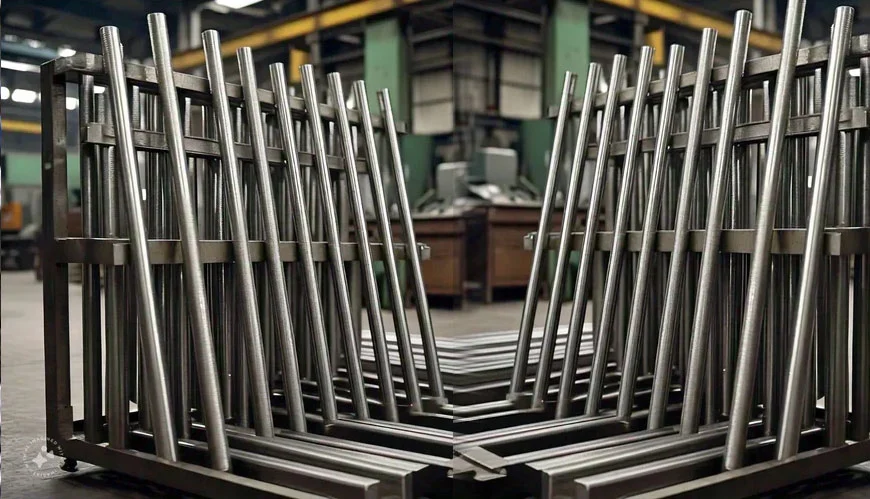
Haynes 188 Round Bar manufacturer & supplier. Excellent high-temperature strength, oxidation and hot-corrosion resistance for gas turbines, aerospace engines, furnace components and demanding industrial applications.
Haynes 263 Round Bar manufacturer & supplier. High strength, excellent weldability and forming characteristics for aircraft engines, industrial gas turbines and demanding high-temperature applications.
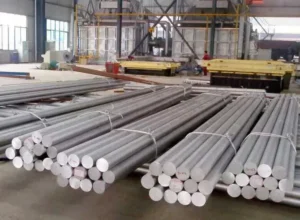
Haynes 230 Round Bar manufacturer & supplier. Excellent high-temperature strength, oxidation resistance and thermal stability for gas turbines, furnace components, heat exchangers and demanding industrial applications.
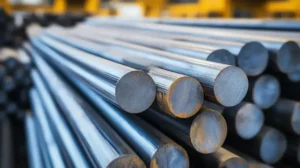
Haynes 214 Round Bar manufacturer & supplier. Outstanding high-temperature oxidation resistance with good forming and joining characteristics for gas turbines, industrial furnaces and high-temperature applications.
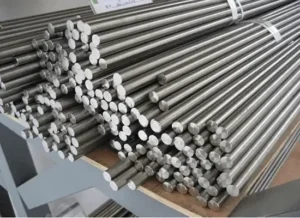
Haynes 242 Round Bar manufacturer & supplier. High strength, low thermal expansion and excellent thermal stability for aerospace, gas turbine, chemical processing and high-temperature industrial applications. Enquire now.
Hastelloy X Round Bar manufacturer & supplier. Excellent high-temperature strength, oxidation resistance and corrosion resistance for gas turbines, industrial furnaces, chemical processing and demanding industrial applications. Enquire now.
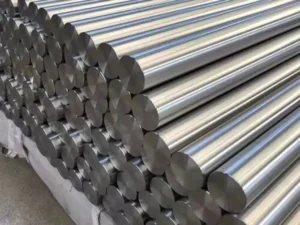
Hastelloy C-2000 Round Bar manufacturer & supplier. Excellent resistance to oxidizing and reducing environments, acids and chloride corrosion for chemical processing, pollution control and demanding industrial applications. Enquire now.
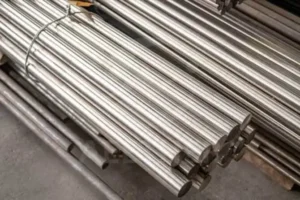
Hastelloy C4 Round Bar manufacturer & supplier. Excellent resistance to hydrochloric acid, sulfuric acid, chlorides and stress corrosion cracking for chemical processing and demanding industrial applications. Enquire now.
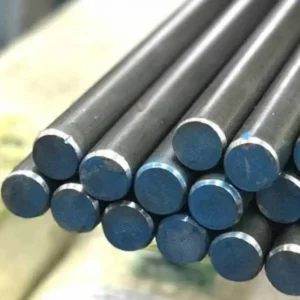
Hastelloy C Round Bar manufacturer & supplier. Excellent resistance to oxidizing and reducing environments, acids, chlorides and stress corrosion cracking for chemical processing and demanding industrial applications.
Hastelloy Alloy B Round Bar manufacturer & supplier. Excellent resistance to hydrochloric acid and other reducing environments for chemical processing, acid handling and demanding industrial applications. Enquire now.
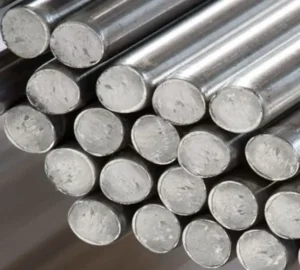
Hastelloy B2 Round Bar manufacturer & supplier. Excellent resistance to hydrochloric acid, reducing acids, pitting and stress corrosion cracking for chemical processing and demanding industrial applications. Enquire now.
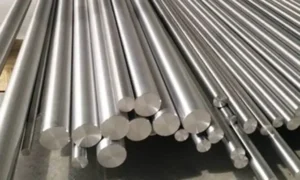
Hastelloy B3 Round Bar manufacturer & supplier. Excellent resistance to hydrochloric, sulfuric and other reducing acids with strong corrosion and stress corrosion cracking resistance for chemical processing applications. Enquire now.
A Hastelloy round bar is a solid cylindrical nickel-alloy product supplied to defined material, dimensional, condition and quality requirements. It helps to think about a purchase like this in five stages: first the service requirement the part has to survive, then the material and governing standard that satisfy it, then the production route used to make it, then the exact geometry and condition needed, and finally the testing and documentation that prove all of that was actually delivered.
A Hastelloy round bar is a solid cylindrical nickel-alloy product, and its complete specification can include its grade, product standard, diameter, length, manufacturing route, tolerance, surface finish, material condition and required documentation. The product specification, in practice, is the complete set of technical and commercial requirements that determines what a supplier is expected to deliver.
Nine things typically define the product. The grade establishes the material identity. The product standard identifies the governing specification. Diameter sets the intended cross-sectional size, and length determines how the bar is prepared and handled. The manufacturing route can affect dimensional and surface characteristics. Tolerance defines the acceptable dimensional deviation. Surface finish affects machining and downstream use. Material condition affects which mechanical requirements apply. And testing or documentation supports conformity and acceptance.
Consider a request for a Hastelloy C276 round bar, 50 mm. That identifies the grade and nominal diameter, but it doesn’t tell the supplier which product standard governs, what length is required, what tolerance is acceptable, what surface finish is needed, what condition is required, or what certification and testing is expected.
Before sending an enquiry, define the application, record the required grade, identify the product standard, note diameter and length, define any critical tolerance or finish, state the required testing and documentation, and confirm quantity and destination.
The most common mistake is treating grade plus diameter as a complete specification. Important supply requirements get left undefined that way, so it helps to complete the relevant fields rather than assume a 50 mm bar from one supplier matches a 50 mm bar from another (tolerance and manufacturing condition can differ significantly). It also helps to resist copying a supplier’s entire specification table into an RFQ. Not every field they list will be relevant to your part, so specify only what actually affects the product you need.
Hastelloy-type alloys belong to the broader family of solid-solution-strengthened, nickel-based superalloys. They are primarily categorized by their dominant alloying additions: nickel-molybdenum (B-family), nickel-chromium-molybdenum (C-family), and nickel-chromium-iron-molybdenum-copper (G-family). They differ in structure and in the combinations of corrosion resistance, thermal stability and fabrication characteristics they offer. (Haynes International) A grade family, in other words, is a group of nickel alloys with related metallurgical structures designed to solve specific categories of corrosion or thermal challenges.
The C-family (Nickel-Chromium-Molybdenum) is the most widely specified for round bars, chosen for exceptional resistance to both oxidizing and reducing media, as well as outstanding resistance to pitting and crevice corrosion. This includes familiar names like Alloy C276 (the versatile workhorse) and Alloy C22 (superior in oxidizing acids and mixed-acid environments). The B-family, such as Alloy B3, is selected specifically for its near-absolute resistance to reducing acids like hydrochloric and sulfuric acid, but it lacks chromium and will fail rapidly in oxidizing environments. The G-family (like Alloy G-30) is used for highly oxidizing acidic environments.
One assumption is worth being cautious about: assuming “Hastelloy” is a single material. Hastelloy is a registered trademark representing a vast portfolio of distinct alloys. C276 and C22 are both C-family alloys, but C22 contains more chromium and tungsten, giving it significantly better resistance to oxidizing environments like wet chlorine gas or nitric acid. The application determines which alloy is actually required.
Grade selection should start with the chemical and thermal conditions the component actually has to withstand, then narrow the candidates by specific corrosion mechanisms, fabrication and mechanical requirements. That’s what a service requirement really is: the environmental, thermal, fabrication and mechanical conditions the component must accommodate.
This approach works best when you know the application but aren’t sure of the grade yet. Start with the exact chemical environment the bar will encounter. Are oxidizing agents present? If yes, you must lean toward C22 or a higher-chromium alloy; B-family alloys will corrode rapidly. If the environment is strictly reducing (pure HCl), B3 is the superior choice. If the environment fluctuates between oxidizing and reducing, or contains chlorides that invite pitting and crevice corrosion, C276 is the standard baseline.
Working through it as a series of questions can help. Are oxidizing acids or salts present in the process stream? If so, the chromium content becomes the dominant constraint. Is the primary threat localized attack (pitting and crevice corrosion) in stagnant, chloride-rich brines? If so, the molybdenum and tungsten content (the PREN value) dictates the choice. Is the component operating at elevated temperatures? If so, thermal stability and resistance to the formation of detrimental secondary phases (like the mu phase) must be evaluated.
It’s tempting to reach for C276 as soon as severe corrosion comes up, but severe service isn’t a single condition. The actual chemical composition, temperature and fluid dynamics determine whether C276 is the right call or if C22 offers a longer service life. Shortcuts like chemical processing means C276 can be useful starting points, but they’re not complete material-selection rules on their own.
Hastelloy round-bar documents can carry several identifiers, and they do different jobs. A grade designation identifies the material, a product standard sets the requirements for the product itself, and dimensional or testing standards govern specific parts of the specification. A product standard, formally, is a technical specification that establishes requirements for a defined class of products.
The same alloy can appear under several designation systems depending on which document you’re reading:
| System | C276 Example | C22 Example | Main purpose |
|---|---|---|---|
| Trade Name | Hastelloy C276 | Hastelloy C22 | Common commercial identification |
| UNS | N10276 | N06022 | Unified alloy identification |
| EN / Werkstoff | 2.4819 | 2.4602 | European material designation |
| DIN (Short Name) | NiMo16Cr15W | NiCr21Mo13W | German/European short material name |
The relevant product standards also do different jobs. Here’s a quick reference for what each one covers:
| Standard | Primary role |
|---|---|
| ASTM B574 / ASME SB574 | Low-carbon Ni-Cr-Mo alloy rod and bar |
| ASTM B564 / ASME SB564 | Nickel alloy forgings (relevant if bar is forged) |
| ASTM E8 / E8M | Tension testing of metallic materials |
| ASTM G28 | Detecting susceptibility to intergranular attack |
| EN 10204 | Inspection-document types (e.g., 3.1 Certificate) |
ASTM explicitly distinguishes B574 (wrought rod and bar) from B564 (forgings) and B622 (seamless pipe and tube). (ASTM International)
Seeing B574, B564 and B622 referenced together, it’s easy to assume they’re interchangeable. They aren’t. B574 addresses the chemical, mechanical and dimensional requirements for wrought rod and bar. B564 addresses forged components. The lesson isn’t to memorize three numbers; it’s to identify which requirement each standard is actually performing.
Designation mapping matters the same way. C276 maps to N10276, to 2.4819, to NiMo16Cr15W—four names for one alloy, which is exactly why checking each document’s role matters rather than assuming the numbers explain themselves.
Before sending an enquiry, identify the material grade, record which designation system each document uses, identify the governing product standard, note any dimensional standard, identify the required testing standard, and verify that any equivalent grade mapping is actually accurate. A few mistakes are worth avoiding: treating every ASTM or EN reference as if it were the material standard, when some govern dimensions, tests or treatments instead; assuming equivalent grades mean identical specifications, when cross-designations don’t erase product-standard differences; and assuming “Hastelloy” is a standard, when it is only a trade name.
Specify more than the nominal diameter whenever dimensional control actually matters. Dimensional tolerance is simply the permitted variation from a specified dimension, and the requirements that can matter go beyond diameter alone: diameter tolerance for machining and fit, length and length tolerance for fixed or cut components, straightness for shafts and precision work, and roundness or ovality for precision fits and rotating components.
The difference this makes in practice is critical due to the nature of nickel alloys. Hastelloy alloys work-harden rapidly. If you purchase a standard hot-rolled bar with a wide commercial tolerance and a rough, scaled surface, your CNC machines will spend significant time and expensive tooling removing that outer layer just to reach clean metal.
What you actually need to specify depends on the job. General stock usually only needs diameter plus required length. Machining stock benefits heavily from diameter, tolerance and a peeled or turned surface condition to remove the work-hardened scale. A precision fit needs diameter, tight tolerance (e.g., h9 or h11), straightness and roundness/ovality where they matter. And if you’re working from an existing drawing, match its dimensional and geometric requirements directly rather than reinventing them.
Straightness and roundness aren’t needed for every purchase. They matter specifically when geometry affects machining, assembly, rotation, feeding or component performance. Common mistakes here include assuming 50 mm means exactly 50.000 mm, when nominal size doesn’t define tolerance on its own; failing to specify a machining allowance; and treating all tolerance classes as interchangeable, when different classes permit very different limits.
Manufacturing and finishing should be chosen based on the dimensional and surface result the next operation actually needs. The manufacturing route is simply the production or finishing method used to bring the bar to its specified form and condition, and hot finishing, cold drawing, peeling, turning, grinding and forging each serve a different purpose.
Hot-finished, annealed and pickled (HRAP) bar is the standard supply condition. It is worth investigating when general stock or subsequent heavy machining is sufficient. Cold-drawn (bright) bar matters when a controlled bright-bar condition, tighter dimensions and a better surface, is genuinely required. Peeling is about controlled surface removal for size and surface refinement, specifically to eliminate the oxidized, work-hardened outer scale. Turning produces a machined outside diameter. Grinding adds further dimensional or surface precision on top of that. And forging-intended material is a separate category altogether. ASTM B574 distinguishes hot-finished from cold-finished products, while ASTM B564 is a separate specification entirely for forgings. (ASTM International)
The practical way to decide: if the bar will undergo substantial CNC machining after delivery, check whether a peeled or turned bar is actually more economical than paying for standard HRAP material. The extra cost per kilo for a peeled bar is often vastly outweighed by the reduction in machining time, tool breakage and scrap rates caused by the hard scale on hot-rolled bar. If the delivered bar needs controlled bright-bar dimensions from the outset, look at the appropriate cold-drawn or ground route.
It’s not automatically better to buy the most highly finished bar available. Extra processing doesn’t add functional value if you are going to forge the bar or melt it down. The better purchasing decision is the route that satisfies the required result without paying for unnecessary processing, while actively minimizing downstream fabrication costs.
Heat-treatment condition fundamentally dictates the corrosion resistance and mechanical state of applicable grades. Hastelloy alloys are typically supplied in the solution annealed condition. This heat treatment dissolves secondary phases that can form during hot working and restores the optimal, homogeneous austenitic grain structure required for maximum corrosion resistance. Material condition, in this context, means the metallurgical or supplied state of the product. ASTM B574 requires that C-family alloys be furnished in the solution-annealed condition unless otherwise specified. (ASTM International)
The mechanical properties that typically matter are tensile strength (used for load-bearing evaluation), yield strength (used in design and load evaluation), elongation (relevant to forming and deformation) and hardness. While Hastelloy alloys are not hardenable by heat treatment (they are solid-solution strengthened), their mechanical properties are heavily influenced by the degree of cold work they have undergone. A cold-drawn bar will have significantly higher yield and tensile strength, but lower ductility, than a hot-rolled, annealed bar of the same grade. ASTM E8/E8M describes the tension-testing methods used to evaluate these properties.
Surface finish and scale removal are also worth separating clearly. A pickled finish relies on chemical baths to remove heat-treatment scale. However, pickling does not remove the underlying work-hardened layer of metal caused by the rolling process. If your application involves highly stressed cyclic loading or requires pristine surface integrity for fatigue resistance, mechanical removal (peeling or turning) is required, not just chemical pickling.
Before finalizing a spec, confirm the required grade and material condition, identify the critical mechanical properties, specify surface finish where relevant, and specify scale removal separately where it’s required. Grade alone doesn’t guarantee every delivered property; condition and specification matter too, and pickled doesn’t mean peeled. They’re separate requirements that need to be stated separately.
Verification should connect the purchase requirement to the physical bar itself, its identification, and the evidence that supports it. An MTC (material test certificate) is only useful when it actually corresponds to the material supplied and the specification that applies. Because Hastelloy alloys are high-value materials that visually resemble standard austenitic stainless steels, verification is a critical risk-management step. Material traceability, in this sense, is the ability to connect supplied material back to its production or heat identification and the records associated with it.
The chain runs from requirement to order to identity to evidence to acceptance. The requirement establishes what was needed. The order becomes the contractual reference. The heat or material identification connects the physical product to its records. The chemistry, mechanical results and test certificate provide the evidence. And acceptance is where the physical product gets checked against both the order and that evidence.
For Hastelloy, Positive Material Identification (PMI) is non-negotiable upon receipt. Because a piece of 316L stainless steel and a piece of Alloy C276 can look identical, and the cost difference is massive, mixing them up in a machine shop can lead to catastrophic field failures. X-ray Fluorescence (XRF) or Optical Emission Spectroscopy (OES) must be used to verify the chemistry matches the Material Test Certificate (MTC).
Additionally, for critical chemical processing applications, buyers often require Intergranular Corrosion (IGC) testing per ASTM G28. This test proves that the material was properly solution-annealed and that detrimental carbide precipitates (which cause sensitization and subsequent IGC) are not present at the grain boundaries.
In practice that means matching the purchased grade and governing standard, matching the heat number via PMI, checking the required chemistry (especially ensuring low carbon and silicon limits for C-family alloys), checking dimensions and condition, and confirming traceability all the way through receiving. Getting an MTC from a supplier isn’t the end of the process. The document is evidence, not a substitute for matching it to the physical material via PMI.
Hastelloy round bars turn up across highly specialized industries, but the industry label should really only be a starting point. The component’s actual environment, manufacturing process, geometry and mechanical requirements are what determine the real product specification. An application requirement, defined more precisely, is the service and manufacturing conditions imposed by the component’s intended use.
In chemical processing (e.g., reactors, heat exchangers, and distillation columns), the primary concern is uniform and localized corrosion in mixed acid/chloride environments, which dictates strict adherence to C-family alloys and rigorous IGC testing. In flue gas desulfurization (FGD) and pollution control (scrubbers), the environment shifts rapidly between oxidizing and reducing states, often requiring C22 or C2000 over standard C276. In oil and gas (sour gas environments, downhole tooling), the requirements combine corrosion resistance with high mechanical strength and strict NACE MR0175 / ISO 15156 compliance. In pharmaceutical and food processing, the requirements focus heavily on surface finish and cleanability to prevent contamination, dictating bright-bar or polished conditions.
Define the actual chemical species, operating temperature, downstream manufacturing, dimensional and fit requirements, critical mechanical requirements and testing/documentation needs before selecting a grade from those constraints. It’s not safe to assume one grade can be used throughout a plant just because it’s familiar. An industry name like chemical processing or sour gas service describes a context, not a complete material requirement on its own.
Build the specification in dependency order: material identity first, then manufacturing route, then geometry, then surface and condition, and finally evidence and delivery, since each stage depends on the one before it. A purchase specification, in full, is the complete technical description used to tell a supplier exactly what product is required.
Start with the grade, designation and product standard, which establishes what material is actually being asked for (e.g., Alloy C276 / UNS N10276 / ASTM B574). From there, define the manufacturing route (hot-rolled annealed pickled, cold-drawn, peeled, or turned), since that defines the supply route itself. Next comes geometry: diameter, length, tolerance and any geometric controls that matter. Then surface and condition: specify if scale removal via machining is required, and confirm the solution-annealed condition. Finally, evidence and delivery: mandate an EN 10204 3.1 MTC, require PMI upon receipt, state any ASTM G28 testing requirements, and define packaging.
A complete specification would cover the grade, UNS/Werkstoff number, governing product standard, manufacturing route, diameter and length, critical dimensional tolerances, straightness/roundness where needed, surface finish (HRAP vs. peeled), heat-treatment condition, MTC requirements, PMI/IGC testing requirements, quantity, cut-to-length requirements, packaging and destination.
It’s a useful exercise to see the transformation directly. Hastelloy C276 round bar, 50 mm on its own leaves standard, tolerance, surface condition, testing, and delivery all essentially undefined. The purpose of working through them is to stop critical, expensive decisions from staying implicit.
A good RFQ gives the supplier enough material, dimensional, condition, quality and delivery information to quote the intended product without having to make assumptions on your behalf. At minimum, an RFQ needs the grade, designation and governing standard; diameter, length and quantity; manufacturing route and finish; and certificate and testing requirements.
It helps to compare what an incomplete request looks like against a more useful one. Hastelloy round bar becomes more useful as Alloy C276 (UNS N10276) per ASTM B574. 50 mm becomes 50 mm peeled to h11 tolerance. 10 pieces becomes 10 pieces at 3 meters random lengths. Certified material becomes EN 10204 3.1 MTC with PMI verification required.
Before sending a request, state the grade, standard, diameter, length, quantity, surface condition, testing requirements, and destination.
Ask honestly whether two qualified suppliers could reasonably interpret your RFQ differently. If one quotes hot-rolled bar and the other quotes peeled bar, the prices will be vastly different, and the cheaper price may actually cost you more in machining time. A supplier can certainly help identify missing requirements, but critical engineering requirements shouldn’t be left to supplier guesswork by default. And the lowest quoted price only means something once the technical scope behind it is actually comparable.
Delivery requirements for high-value nickel alloys must cover cut length, product identification, protection, packaging and documentation according to what the actual shipment needs. Because the material cost is extremely high, security and traceability during transit are paramount.
Length needs to be defined clearly (fixed, exact, or random). Identification needs to be maintained throughout the shipment. Heat numbers must be stenciled clearly on the bars themselves, and the marking paint or stamping must be robust enough to survive transit without rubbing off. If the heat number is lost, the material is effectively scrap, as it can no longer be tied to its MTC.
Packaging needs to be coordinated with the transport method. Hastelloy bars should be packed in heavy-duty wooden crates or bundling, separated to prevent physical damage and galling (which can occur if nickel alloys rub against each other or carbon steel during transit). For export, VCI (Volatile Corrosion Inhibitor) packaging or heavy wrapping may be required to prevent surface contamination from salt air, even though the alloy itself is highly corrosion-resistant.
Before shipment, state the required length and any length tolerance, define surface protection where needed, define bundle or product identification (heat numbers visible without uncrating), confirm the required technical documents, confirm packaging, confirm the destination, confirm any applicable export documents, and maintain traceability through the whole shipment.
The strongest buying decision isn’t simply the lowest price per kilogram for a familiar grade. It’s the offer that describes the right material, production route, dimensions, condition and evidence for the intended service, optimizing the total cost of ownership.
Because Hastelloy alloys work-harden rapidly and require specialized tooling to machine, the cost of the raw bar is only part of the equation. A lower price for a hot-rolled, heavily scaled bar isn’t actually a lower price if your CNC shop has to spend 40% more time and destroy twice as many carbide inserts just to clean up the outside diameter. Buying a peeled or turned bar might cost slightly more upfront but can drastically reduce total manufacturing costs.
Before comparing prices, check that both quotations are for the same manufacturing route (HRAP vs. Peeled), that the same relevant product standard is being applied, that diameter and tolerances are equivalent, that testing and documentation requirements match (especially PMI and IGC testing), and that quantity and delivery requirements are actually comparable.
The lowest price is only the most important factor once the relevant technical scope is comparable. A lower price for a different surface condition or missing ASTM G28 testing isn’t actually a lower price for the same product; it’s a different product.
A grade-and-price mindset asks who can supply C276 the cheapest. A specification mindset asks whether the quotations are actually for equivalent products, and whether the supplied surface condition will optimize downstream machining. The principle worth carrying forward: choose the material from the service requirement, define the product from the material and processing needs, and only compare suppliers once the quoted specifications are technically equivalent.
Send your Hastelloy round bar grade, standard, dimensions, surface condition, testing requirements, quantity and destination for quotation.
Tell us what you need and our sales team will get back to you with availability, pricing, and delivery options.