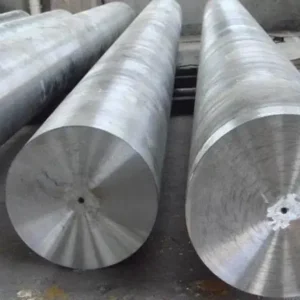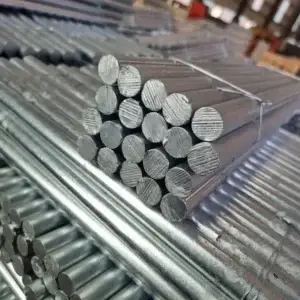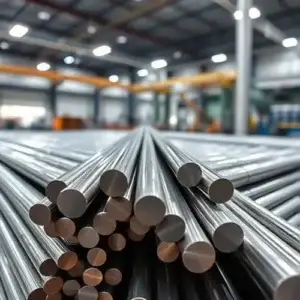
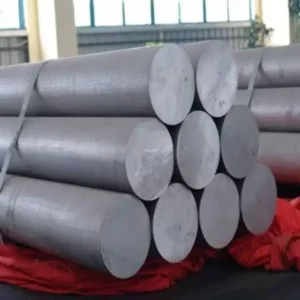
Stainless Steel 441 Round Bar
Stainless Steel 441 Round Bar manufacturer & supplier. Excellent high-temperature oxidation resistance, weldability and corrosion resistance for automotive exhaust, heat exchangers, boilers and industrial applications.
Round Bars Wholesaler, Exporter & Supplier
Stainless steel round bars are solid cylindrical stainless-steel products used for machined components, shafts, pins, fasteners and other industrial parts. But a grade and diameter alone don’t always define the complete product: a purchase may also need a product standard, length, manufacturing route, tolerance, surface finish, material condition, testing and documentation. ASTM A276/A276M-25, for example, covers hot-finished and cold-finished stainless-steel bars and shapes, including rounds.
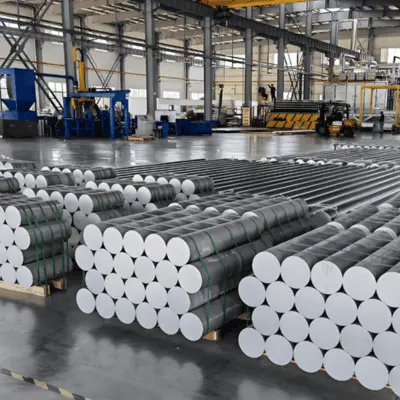
Stainless Steel 441 Round Bar manufacturer & supplier. Excellent high-temperature oxidation resistance, weldability and corrosion resistance for automotive exhaust, heat exchangers, boilers and industrial applications.
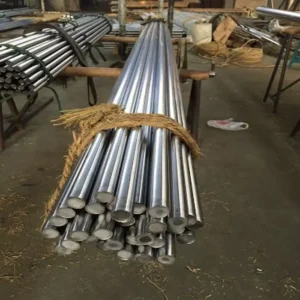
Stainless Steel 410S Round Bar manufacturer & supplier. Good oxidation resistance, weldability and corrosion resistance for furnace components, heat exchangers, valves, boilers and industrial applications.
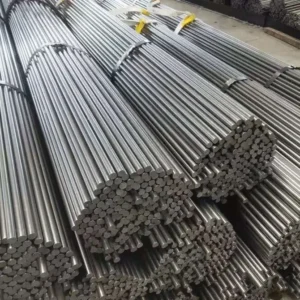
Stainless Steel 416Se Round Bar manufacturer & supplier. Excellent machinability, good corrosion resistance and reliable performance for shafts, valves, fasteners and precision components. Enquire now.
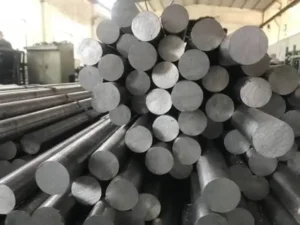
Stainless Steel 420F Round Bar manufacturer & supplier. Excellent machinability with high hardness, strength and wear resistance for precision-machined shafts, valves, gears, fasteners and industrial components.
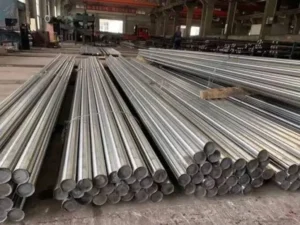
Stainless Steel 444 Round Bar manufacturer & supplier. Excellent corrosion resistance, chloride stress corrosion cracking resistance and high-temperature performance for industrial applications. Enquire now.
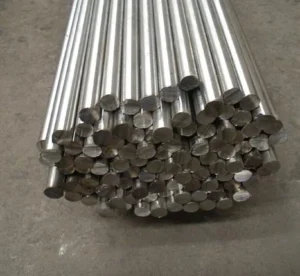
Buy Stainless Steel 303 Round Bar from a reliable manufacturer & supplier. Choose from multiple sizes and finishes, with competitive prices and fast quotation.
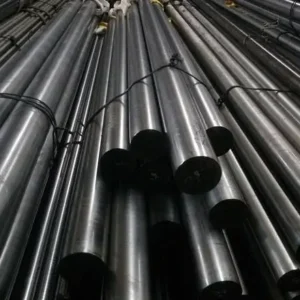
AL6XN Round Bar manufacturer & supplier. Super austenitic 6% molybdenum alloy for seawater and aggressive chlorides. Request pricing and availability.
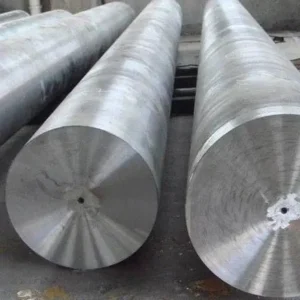
253MA Round Bar manufacturer & supplier. Rare earth alloyed austenitic grade offering strong high-temperature oxidation resistance. Request a quote.
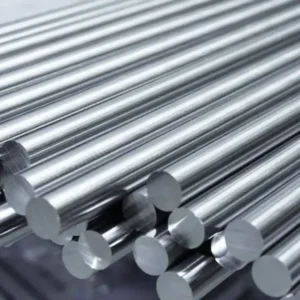
Stainless Steel 13-8 Mo Round Bar manufacturer & supplier. Precipitation hardening grade prized for high strength with good toughness. Request a quote.
A stainless steel round bar is a solid cylindrical stainless-steel bar supplied to defined material, dimensional, condition and quality requirements. It helps to think about a purchase like this in five stages: first the service requirement the part has to survive, then the material and governing standard that satisfy it, then the production route used to make it, then the exact geometry and condition needed, and finally the testing and documentation that prove all of that was actually delivered.
A stainless steel round bar is a solid cylindrical stainless-steel product, and its complete specification can include its grade, product standard, diameter, length, manufacturing route, tolerance, surface finish, material condition and required documentation. The product specification, in practice, is the complete set of technical and commercial requirements that determines what a supplier is expected to deliver.
Nine things typically define the product. The grade establishes the material identity. The product standard identifies the governing specification. Diameter sets the intended cross-sectional size, and length determines how the bar is prepared and handled. The manufacturing route can affect dimensional and surface characteristics. Tolerance defines the acceptable dimensional deviation. Surface finish affects machining and downstream use. Material condition affects which mechanical requirements apply. And testing or documentation supports conformity and acceptance.
Consider a request for a 316L stainless steel round bar, 50 mm. That identifies the grade and nominal diameter, but it doesn’t tell the supplier which product standard governs, what length is required, what tolerance is acceptable, what surface finish is needed, what condition is required, or what certification and testing is expected.
Before sending an enquiry, define the application, record the required grade, identify the product standard, note diameter and length, define any critical tolerance or finish, state the required testing and documentation, and confirm quantity and destination.
The most common mistake is treating grade plus diameter as a complete specification. Important supply requirements get left undefined that way, so it helps to complete the relevant fields rather than assume a 50 mm bar from one supplier matches a 50 mm bar from another (tolerance and manufacturing condition can differ significantly). It also helps to resist copying a supplier’s entire specification table into an RFQ. Not every field they list will be relevant to your part, so specify only what actually affects the product you need.
Stainless steel round bars are available across a number of metallurgical families: austenitic, ferritic, martensitic, duplex and precipitation-hardening. They differ in structure and in the combinations of corrosion resistance, strength, fabrication characteristics and heat-treatment response they offer. (worldstainless) (BSSA) A grade family, in other words, is a group of stainless steels with related metallurgical structures and broadly related properties.
Austenitic grades are usually chosen for corrosion resistance, ductility and fabrication, and include familiar names like 303, 304/304L, 316/316L, 321, 347 and 904L. Ferritic grades such as 430 are picked for their ferritic structure and corrosion-resistant service. Martensitic grades, 410, 420 and 440C, are selected for hardness and strength. Duplex grades like 2205 combine strength with corrosion resistance, and precipitation-hardening grades such as 17-4 PH (630) are used where a high-strength condition is needed.
Within these families, 303 is a free-machining grade. 304/304L are the widely used general-purpose austenitic grades. 316/316L add molybdenum for better corrosion resistance. 321 and 347 are stabilized austenitic grades, and 410, 420 and 440C are the common martensitic options. 17-4 PH/630 is precipitation hardening, while 2205 is duplex. BSSA provides grade-family and designation information for all of these. (BSSA)
One assumption is worth being cautious about: the most common grade isn’t automatically the right grade. A familiar grade is only a candidate; the application determines which requirements actually matter. If you know the application but not the grade, the next section walks through a selection method. If you already know the grade but not the exact product form, skip ahead to the standards and specification sections.
Grade selection should start with the conditions the component actually has to withstand, then narrow the candidates by temperature, fabrication and mechanical requirements. That’s what a service requirement really is: the environmental, thermal, fabrication and mechanical conditions the component must accommodate.
This approach works best when you know the application but aren’t sure of the grade yet. Start with the environment the bar will encounter, since that narrows the corrosion and service candidates fastest. Then consider temperature, which narrows thermal-use candidates, followed by how the part will be machined, welded or formed, which adds fabrication constraints. Add in the strength or hardness the part demands, and by that point you should have a short list of realistic candidates. Where their requirements conflict with each other, weigh the trade-offs to land on the practical choice. BSSA identifies 303 as a free-machining grade, and its broader grade information shows how other grades solve different combinations of service and property requirements. (BSSA)
Working through it as a series of questions can help. Is corrosion or service exposure the dominant constraint? If so, narrow by environment first; if not, move on to temperature and fabrication. Is elevated temperature important? If yes, lean on temperature-specific material data. Is machining a major requirement? If so, machinability needs to be part of the comparison. Is strength or hardness critical? If so, include heat-treatable or precipitation-hardening candidates where they apply. And if the requirements still conflict at that point, compare what’s left by trade-off rather than defaulting to habit.
It’s tempting to reach for 316 as soon as corrosion resistance comes up, but corrosive service isn’t a single condition. The actual environment, temperature, fabrication method and mechanical duty still determine whether 316 is the right call. Shortcuts like marine means 316 or CNC means 303 can be useful starting points, but they’re not complete material-selection rules on their own.
The distinction worth remembering: you need grade selection when the service requirement is known but the material isn’t. You need specification selection when the material is already decided but the exact product still isn’t.
Stainless steel round-bar documents can carry several identifiers, and they do different jobs. A grade designation identifies the material, a product standard sets the requirements for the product itself, and dimensional or testing standards govern specific parts of the specification. A product standard, formally, is a technical specification that establishes requirements for a defined class of products.
The same grade can appear under several designation systems depending on which document you’re reading:
| System | Example | Main purpose |
|---|---|---|
| AISI | 304 | Common grade designation |
| UNS | S30400 | Unified alloy identification |
| EN | 1.4301 | European material designation |
| Werkstoff | 1.4301 | German material number |
| JIS | SUS304 | Japanese designation |
The relevant product standards also do different jobs. Here’s a quick reference for what each one covers:
| Standard | Primary role |
|---|---|
| ASTM A276/A276M | Stainless-steel bars and shapes |
| ASTM A314 | Stainless billets/bars intended for forging |
| ASTM A582/A582M | Free-machining stainless-steel bars |
| ASTM A370 | Mechanical testing |
| ASTM A967/A967M | Chemical passivation |
| EN 10060 | Hot-rolled round-bar dimensions and tolerances |
| EN 10278 | Bright stainless-bar dimensions and tolerances |
| ISO 286-2 | Standard tolerance classes and limit deviations for holes and shafts |
| EN 10204 | Inspection-document types |
ASTM explicitly distinguishes A276/A276M from A314 and A582/A582M according to product and use. (ASTM International)
Seeing A276, A314 and A582 referenced together, it’s easy to assume they’re interchangeable. They aren’t. A276 addresses stainless-steel bars and shapes within its scope. A314 addresses stainless billets and bars intended only for forging. A582/A582M addresses free-machining stainless-steel bars specifically. The lesson isn’t to memorize three numbers; it’s to identify which requirement each standard is actually performing.
Designation mapping matters the same way. BSSA maps 17-4 PH to 630, to EN 1.4542, to UNS S17400 (BSSA), four names for one alloy, which is exactly why checking each document’s role matters rather than assuming the numbers explain themselves.
Before sending an enquiry, identify the material grade, record which designation system each document uses, identify the governing product standard, note any dimensional standard, identify the required testing standard, and verify that any equivalent grade mapping is actually accurate. A few mistakes are worth avoiding: treating every ASTM or EN reference as if it were the material standard, when some govern dimensions, tests or treatments instead; assuming equivalent grades mean identical specifications, when cross-designations don’t erase product-standard differences; and listing every standard you’ve come across without stating which one actually applies, since the supplier still has to interpret the order either way.
Specify more than the nominal diameter whenever dimensional control actually matters. Dimensional tolerance is simply the permitted variation from a specified dimension, and the requirements that can matter go beyond diameter alone: diameter tolerance for machining and fit, length and length tolerance for fixed or cut components, straightness for shafts and precision work, and roundness or ovality for precision fits and rotating components. BSSA’s explanation of EN 10060 treats diameter, ovality, length and straightness as separate characteristics rather than one another’s proxy. (BSSA)
The difference this makes in practice is easy to underestimate. BSSA’s EN 10278 guidance gives a 20 mm h9 example with a 0.052 mm tolerance, an acceptable range of 19.948 to 20.000 mm under that class. (BSSA) 20 mm on its own simply doesn’t communicate the same requirement as 20 mm h9.
What you actually need to specify depends on the job. General stock usually only needs diameter plus required length. Machining stock benefits from diameter, tolerance and the relevant surface condition. A precision fit needs diameter, tolerance, straightness and roundness/ovality where they matter. A fixed-length component needs length and its applicable tolerance. And if you’re working from an existing drawing, match its dimensional and geometric requirements directly rather than reinventing them.
Straightness and roundness aren’t needed for every purchase. They matter specifically when geometry affects machining, assembly, rotation, feeding or component performance, so it’s worth checking whether any of those apply before adding them to a spec. Common mistakes here include assuming 20 mm means exactly 20.000 mm, when nominal size doesn’t define tolerance on its own; assuming diameter controls everything, when straightness and cross-sectional geometry are separate characteristics that need adding when the application requires them; and treating all tolerance classes as interchangeable, when different classes permit very different limits.
Manufacturing and finishing should be chosen based on the dimensional and surface result the next operation actually needs. The manufacturing route is simply the production or finishing method used to bring the bar to its specified form and condition, and hot finishing, cold drawing, peeling, turning, grinding and forging each serve a different purpose.
Hot-finished bar is worth investigating when general stock or subsequent machining is sufficient. Cold-drawn (bright) bar matters when a controlled bright-bar condition, tighter dimensions and a better surface, is genuinely required. Peeling is about controlled surface removal for size and surface refinement. Turning produces a machined outside diameter. Grinding adds further dimensional or surface precision on top of that. And forging-intended material is a separate category altogether, meant for material that will be forged rather than machined directly. ASTM A276 distinguishes hot-finished from cold-finished products, while ASTM A314 is a separate specification entirely for stainless billets and bars intended only for forging. (ASTM International) BSSA’s EN 10278 guidance connects drawn, turned and ground bright-bar conditions to their respective dimensional requirements. (BSSA)
The practical way to decide: if the bar will undergo substantial machining after delivery, check whether conventional hot-finished material is actually sufficient before paying for more. If the delivered bar needs controlled bright-bar dimensions from the outset, look at the appropriate bright-bar route and tolerance. If the outside diameter needs refining, peeling or turning are the options; if it needs further dimensional or surface finishing on top of that, grinding is the next step. And if the material is specifically intended for forging, that’s a distinct requirement to verify directly rather than assume.
It’s not automatically better to buy the most highly finished bar available. Extra processing doesn’t add functional value if later machining is going to establish the final surface or dimension anyway. The better purchasing decision is the route that satisfies the required result without paying for unnecessary processing.
Heat-treatment condition can affect the mechanical state of applicable grades, while surface finish and chemical surface treatment address entirely different characteristics. That means grade, condition and required properties need to be considered together rather than in isolation. Material condition, in this context, means the metallurgical or supplied state of the product, including any relevant heat-treatment or cold-work condition. ASTM A276/A276M-25 identifies multiple supply conditions, including annealed, hardened/tempered and cold-worked. (ASTM International)
17-4 PH is a useful example. BSSA maps it as 17-4 PH to 630, to 1.4542, to S17400, and describes the grade as combining corrosion resistance with high strength. (BSSA) The purchasing distinction worth remembering is that grade identifies the alloy, while condition defines the state in which that alloy is actually supplied.
The mechanical properties that typically matter are tensile strength (the maximum tensile stress reached in testing, used for load-bearing evaluation), yield strength (the stress associated with the onset of plastic deformation, used in design and load evaluation), elongation (a measure tied to ductility, relevant to forming and deformation), and hardness (resistance to indentation, relevant to wear and application requirements). ASTM A276/A276M-25 requires mechanical testing for these properties, including Brinell hardness, for the products it covers. (ASTM International)
Surface finish and passivation are also worth separating clearly. A polished finish is a surface-finish requirement, while chemical passivation is a distinct surface treatment. BS EN 10278 identifies polished bright-bar condition as +PL, while ASTM A967/A967M-25 covers chemical passivation treatments including nitric-acid, citric-acid and electrochemical methods. (BSSA) (ASTM International)
Before finalizing a spec, confirm the required grade and material condition, identify the critical mechanical properties, specify surface finish where relevant, and specify passivation separately where it’s required, along with whatever tests or documentation apply. Grade alone doesn’t guarantee every delivered property; condition and specification matter too, and polished doesn’t mean passivated. They’re separate requirements that need to be stated separately. Property tables aren’t universal either, since values depend on grade, condition and the governing specification, so use the applicable standard rather than a generic reference. A buyer who compares only grade and tensile strength can still miss whether the delivered condition actually suits the component, which is why grade, condition, required property and verification are best treated as one connected chain rather than four separate checks.
Verification should connect the purchase requirement to the physical bar itself, its identification, and the evidence that supports it. An MTC (material test certificate) is only useful when it actually corresponds to the material supplied and the specification that applies. Material traceability, in this sense, is the ability to connect supplied material back to its production or heat identification and the records associated with it.
The chain runs from requirement to order to identity to evidence to acceptance. The requirement establishes what was needed (grade, standard, dimensions, condition). The order becomes the contractual reference. The heat or material identification connects the physical product to its records. The chemistry, mechanical results and test certificate provide the evidence. And acceptance is where the physical product gets checked against both the order and that evidence. ASTM A370-26 describes the mechanical-testing methods used to evaluate whether steel, stainless steel and related alloy products conform to their specifications. (ASTM International)
Working through verification is really a sequence of checks. Does the certificate grade match what was purchased? If not, stop and resolve the discrepancy before going further. Can the material identity or heat number be matched? If not, traceability hasn’t actually been established. Do the dimensions match the order? Do the chemistry, mechanical and test results satisfy the governing requirement? Only once the physical material and its documentation genuinely correspond should you proceed to the normal receiving procedure.
In practice that means matching the purchased grade and governing standard, matching the heat or material identification, checking the required chemistry and mechanical results, checking dimensions and condition, checking the inspection and testing records, and confirming traceability all the way through receiving. Getting an MTC from a supplier isn’t the end of the process. The document is evidence, not a substitute for matching it to the physical material and the purchase requirement. A heat number isn’t just paperwork either; it’s what connects the material to its records, so the physical and documentary checks need to be closed together rather than treated as separate boxes.
Stainless steel round bars turn up across a wide range of industries, but the industry label should really only be a starting point. The component’s actual environment, manufacturing process, geometry and mechanical requirements are what determine the real product specification. An application requirement, defined more precisely, is the service and manufacturing conditions imposed by the component’s intended use.
In CNC machining, the main concern is machinability combined with dimensional control, which usually means paying close attention to grade, finish and tolerance. For shafts and pins, geometry and mechanical requirements dominate: diameter, straightness, roundness and material properties all matter together. Chemical processing applications are governed by corrosion and service conditions, so grade, exposure and temperature need to be worked out specifically. Food and pharmaceutical equipment adds surface requirements to the corrosion question, bringing grade, surface finish and treatment into play. Oil and gas work tends to combine service, mechanical and documentation requirements, so grade, standard and inspection all matter. Marine applications are really about the actual chloride and service exposure the part will see, not marine as a label on its own. And power generation applications are driven by temperature, which means temperature-specific data and the requirements that follow from it.
Define the actual service environment, operating temperature, downstream manufacturing, dimensional and fit requirements, critical mechanical requirements and testing/documentation needs before selecting a grade from those constraints, rather than the other way around. It’s not safe to assume one grade can be used throughout a plant just because it’s familiar; components in the same facility can operate under very different temperatures, environments, loads and manufacturing conditions. An industry name like chemical processing, marine service or CNC machining describes a context, not a complete material requirement on its own.
Build the specification in dependency order: material identity first, then manufacturing route, then geometry, then surface and condition, and finally evidence and delivery, since each stage depends on the one before it. A purchase specification, in full, is the complete technical description used to tell a supplier exactly what product is required.
Start with the grade, designation and product standard, which establishes what material is actually being asked for. From there, define the manufacturing route (hot finished, cold drawn, peeled, turned, ground, or forging-intended, whichever applies), since that defines the supply route itself. Next comes geometry: diameter, length, tolerance and any geometric controls that matter. Then surface and condition: finish, roughness where relevant, and material condition or treatment, which together define the state the bar is delivered in. Finally, evidence and delivery: testing, certification, traceability, packaging and destination, which define how conformity will be verified and how the material will actually arrive.
A complete specification would cover the grade, designation, governing product standard, manufacturing route where relevant, diameter and length, critical dimensional tolerances, straightness/roundness where needed, surface finish, material condition, passivation or treatment where required, testing and certificate requirements, inspection requirements, quantity, cut-to-length requirements, packaging and destination.
It’s a useful exercise to see the transformation directly. 316L round bar, 50 mm on its own leaves grade, standard, diameter, length, tolerance, route, finish, condition, testing/certificate, quantity and delivery all essentially undefined. Not every field will be relevant to every order; the exact fields depend on the application, but the purpose of working through them is to stop critical decisions from staying implicit.
If the grade itself is still unknown, go back to the service-constraint approach earlier in this guide. If the grade is known but the product is still incomplete, work through this dependency chain. And if supplier quotations come back looking different from each other, apply the purchase-to-proof logic from the testing section and compare the complete specifications side by side rather than just the prices.
A longer specification isn’t automatically a better one. The goal isn’t maximum detail; it’s enough relevant detail to remove the ambiguity that actually matters. Adding fields that don’t affect the purchase just adds noise. Copying a supplier’s own table can pull in requirements that aren’t actually essential. And leaving critical fields implicit invites different suppliers to interpret them differently, which is exactly what a specification is meant to prevent.
A good RFQ gives the supplier enough material, dimensional, condition, quality and delivery information to quote the intended product without having to make assumptions on your behalf. At minimum, an RFQ needs the grade, designation and governing standard on the material side; diameter, length and quantity on the geometry side; manufacturing route, finish, tolerance and material condition where they apply, for product condition; certificate, testing and inspection requirements for quality evidence; and cut-to-length, packaging, destination and delivery requirements for the delivery side.
It helps to compare what an incomplete request looks like against a more useful one. 316L round bar becomes more useful as grade plus governing standard. 50 mm becomes diameter plus required tolerance. 10 pieces becomes quantity plus length. Certified material becomes a defined certificate or testing requirement. Deliver to us becomes an actual destination plus delivery requirement.
Before sending a request, state the grade, standard, diameter and length, quantity, tolerance and finish where required, material condition where applicable, certification and testing requirements, inspection requirements, and destination and delivery requirement.
Ask honestly whether two qualified suppliers could reasonably interpret your RFQ differently. If so, clarify the missing specification before you send it out, since an RFQ that leaves room for interpretation is much less likely to produce quotations you can actually compare. A supplier can certainly help identify missing requirements, but critical engineering requirements shouldn’t be left to supplier guesswork by default. And the lowest quoted price only means something once the technical scope behind it is actually comparable; price becomes meaningful after that point, not before it. Showing the fields a complete RFQ needs, rather than expecting a buyer to remember them from scratch, is really just an application of a basic usability principle: recognition is easier than recall. (Nielsen Norman Group)
Delivery requirements should cover cut length, product identification, protection, packaging, documentation and destination according to what the actual shipment needs. Cut-to-length simply means supplying bar material at a specified customer-required length.
Domestic and export shipments share most of the same categories, but export tends to demand more of each. Length still needs to be defined either way, but identification needs to be maintained throughout the shipment rather than just where required. Surface protection needs to account for longer transport and handling. Documentation needs the applicable shipment paperwork on top of the usual specification documents. Packaging needs to be coordinated with the transport method and destination rather than just matched to local handling. And traceability needs to be maintained through shipment and receipt, not just at the point of dispatch. BSSA’s EN 10060 guidance distinguishes manufacturing, fixed and exact-length requirements, and stresses specifying which length type you need at the enquiry or order stage. (BSSA)
Before shipment, state the required length and any length tolerance, define surface protection where needed, define bundle or product identification, confirm the required technical documents, confirm packaging, confirm the destination, confirm any applicable export documents, and maintain traceability through the whole shipment.
Whether fixed or exact length is required determines whether you need to state a tolerance alongside the length, or simply confirm an acceptable supply length. Whether the surface is sensitive to handling determines whether protection requirements need to be defined, or whether standard packaging is enough. And whether the shipment is international determines whether destination-specific documentation and packaging apply, or whether the usual domestic delivery requirements will do.
Packaging isn’t purely a logistics issue. Protection, identification and documentation can all affect receiving, inspection and traceability once the material arrives. Leaving cut length until dispatch is a common mistake, since cutting is really a product requirement that belongs at the enquiry stage, not an afterthought. Treating packaging as generic is another, since product and transport conditions differ enough to need a defined protection requirement. And separating documents from delivery causes problems too, since receiving teams need the evidence tied to the material, not delivered separately from it.
The strongest buying decision isn’t simply the lowest price for a familiar grade. It’s the offer that describes the right material, production route, dimensions, condition and evidence for the intended service. Two supplier quotations are technically equivalent only when they describe the same relevant grade, product standard, dimensions, tolerance, condition, finish, testing/documentation and delivery requirements closely enough for their prices to actually be compared meaningfully.
It helps to think of the whole guide as a ladder. Why (what must the component survive) sets the service requirement. What (which material and standard satisfy it) sets the material identity. How (how it should be produced and finished) sets the manufacturing route. Exactly (what dimensions and condition are required) sets the physical specification. And prove it (how conformity will be established) sets the evidence.
A final purchasing diagnostic means covering service (environment, temperature, component duty), material (grade, governing standard), route (manufacturing route, required finish), geometry (diameter, length, critical tolerances) and evidence (testing/certification, traceability requirements), in that order, before price ever enters the conversation.
Before comparing prices, check that both quotations are for the same material, that the same relevant product standard is being applied, that diameter, length and tolerances are equivalent, that manufacturing and material conditions match, that the surface requirement is equivalent, that testing and documentation requirements match, and that quantity, destination and delivery requirements are actually comparable.
The lowest price is only the most important factor once the relevant technical scope is comparable. A lower price for a different tolerance, finish, condition or documentation requirement isn’t actually a lower price for the same product; it’s a different product. Comparing price first and resolving technical differences later gets the order backwards.
A grade-and-price mindset asks who can supply 316L the cheapest. A specification mindset asks whether the quotations are actually for equivalent products in the first place, and the second question is more useful, because a stainless steel round bar was never fully defined by its grade name alone. The principle worth carrying forward: choose the material from the service requirement, define the product from the material and processing needs, and only compare suppliers once the quoted specifications are technically equivalent.
Send your stainless steel round bar grade, standard, dimensions, tolerances, condition, testing requirements, quantity and destination for quotation.
Tell us what you need and our sales team will get back to you with availability, pricing, and delivery options.