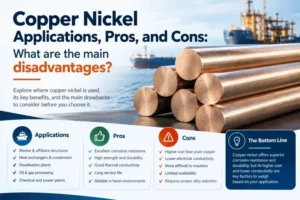
Copper nickel applications, pros, and cons: What are the main disadvantages?
Engineers and procurement teams specify copper nickel (CuNi) alloys for marine, offshore, and desalination projects because the metal resists seawater

Engineers and procurement teams specify copper nickel (CuNi) alloys for marine, offshore, and desalination projects because the metal resists seawater
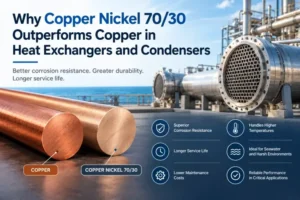
Pure copper has excellent thermal conductivity, but it fails quickly in aggressive cooling environments like seawater, brackish water, and industrial

You can weld Copper Nickel (CuNi) at home if you have a DC TIG welder, pure argon shielding gas, deoxidized
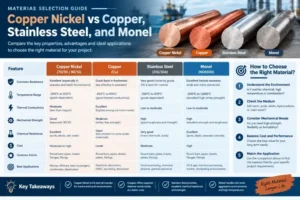
Engineers and procurement teams working in seawater cooling, offshore oil and gas, and desalination face a specific problem. They must

Marine, offshore, and desalination projects use copper nickel alloys for seawater corrosion resistance. The two most common grades are 90/10
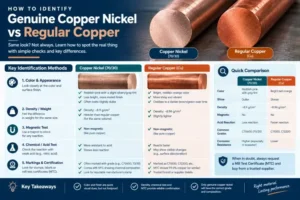
Marine engineering and desalination plants require materials that resist seawater corrosion. Copper nickel alloys, specifically 90/10 (UNS C70600) and 70/30

When you swap carbon steel for copper nickel in a marine or desalination project, the weight changes immediately. Copper nickel

Engineers specify Copper Nickel 90/10 round bar (UNS C70600, W.Nr 2.0872, CW352H) for shafts, valve stems, fasteners, and pump components
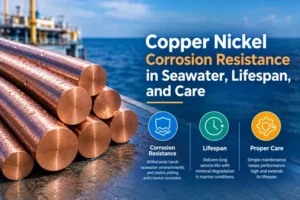
Does copper nickel corrode in saltwater? Copper nickel does not suffer from rapid general corrosion in clean, flowing seawater. Marine
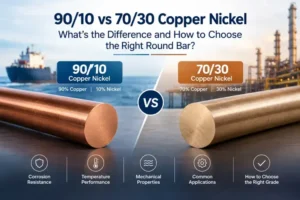
Anyone specifying copper-nickel round bar eventually lands on the same fork in the road: 90/10 (UNS C70600) or 70/30 (UNS